Prefer to watch? This short video walks through the key winter storm warning signs covered below.
Why Winter Storms Reveal Hidden Problems
Winter storms have a way of exposing issues in a house that stay hidden the rest of the year. When temperatures drop and snow piles up, your heating system is working overtime—and any weaknesses in insulation, roofing, windows, or doors suddenly become much easier to spot.
Unlike summer, where inefficiencies can be subtle, cold weather creates clear signals. Uneven snow on the roof, cold drafts near windows, and rising energy bills are all signs that heat may be escaping where it shouldn’t. These issues don’t always mean something is “wrong” in an emergency sense, but they do indicate that parts of the house may no longer be performing efficiently.
Paying attention during a snowstorm is important because:
Heat loss is more visible
Air leaks are easier to feel
Moisture problems show up faster
Small inefficiencies can quickly turn into bigger concerns
In other words, winter weather acts like a stress test. The better a house performs during a storm, the more comfortable, efficient, and protected it tends to be year-round.
Quick Take [TL;DR]:
Winter storms reveal how well a house is performing. Uneven roof snow melt, ice dams, cold drafts, rising heating bills, and window condensation can all signal heat loss or air leaks. Paying attention during snowstorms helps homeowners identify issues early—before damage occurs.
Snow on the Roof — What It Can Tell You About Heat Loss
One of the easiest things to observe during a snowstorm is what’s happening on the roof.
If snow stays evenly packed across the roof for several days after a storm, that usually means the attic insulation is doing its job—keeping warm air inside the house where it belongs. But if snow is melting quickly or unevenly, especially compared to nearby houses, it’s often a sign that heat is escaping through the roof.
What uneven snow melt usually means
When warm air leaks from the living space into the attic, it warms the roof deck from underneath. That heat causes snow to melt faster in certain areas, even when outdoor temperatures remain below freezing. This typically points to:
Insufficient attic insulation
Older insulation that has settled or degraded
Gaps or air leaks allowing heat to escape upward
In many cases, homeowners don’t realize this is happening because everything inside feels warm enough—until winter weather makes the problem visible.
Why this matters beyond energy loss
Heat escaping through the roof doesn’t just affect comfort and heating costs. It can also lead to:
Increased risk of ice dams forming near roof edges
Refreezing snow that traps water under shingles
Moisture issues that may eventually lead to leaks
What starts as simple heat loss can quietly create conditions for roof damage over time.
A quick comparison trick
After a snowfall, take a look around the neighborhood:
If most roofs still have snow but yours doesn’t, that’s a strong indicator of heat loss
If certain sections melt faster than others, insulation coverage may be uneven
If snow melts near the roof edges and refreezes into icicles, warm air is likely escaping upward
These visual cues are often the first sign that attic insulation isn’t performing as effectively as it should—long before damage occurs inside.
Ice Dams & Icicles — When Snow Becomes a Bigger Problem
Icicles hanging from the edge of a roof might look harmless—or even decorative—but during winter storms, they can be a sign of a much bigger issue developing above and below the roofline.
What ice dams actually are
Ice dams form when heat escaping from the house warms the roof and melts snow. As that melted snow runs down toward the colder edges of the roof, it refreezes. Over time, this creates a ridge of ice that traps additional melting snow behind it.
Once water is trapped, it has nowhere to go. That water can:
Back up under shingles
Work its way into roof decking
Eventually leak into ceilings or walls
The problem isn’t the ice itself—it’s the heat loss that caused it.
Why insulation plays a major role
A properly insulated attic helps keep the roof surface cold during winter. When warm air is contained inside the living space, snow melts more slowly and evenly.
Ice dams are often linked to:
Inadequate attic insulation
Warm air leaking into the attic
Uneven roof temperatures
That’s why two houses on the same street can look completely different after a storm—one with clean roof lines, and another with heavy ice buildup along the edges.
When icicles are a warning sign
Small icicles aren’t always cause for concern. But large, thick, or growing icicles—especially after multiple snowfalls—can indicate ongoing heat loss and refreezing.
These conditions increase the risk of:
Water damage inside the house
Rotting roof materials
Premature roof wear
Costly repairs once temperatures rise
Why ice dams shouldn’t be ignored
Ice dams often don’t cause immediate leaks. Instead, they create slow, hidden damage that becomes visible weeks or months later. By the time staining or moisture shows up inside, the issue has usually been happening for a while.
Catching the warning signs during winter gives homeowners a chance to address the root cause—before spring thaw reveals the consequences.
Cold Drafts Inside — Windows & Doors Under the Microscope
When a winter storm hits, one of the most noticeable changes inside the house is how it feels. Even if the thermostat is set higher than normal, certain rooms may feel colder, floors may feel drafty, or you might notice cold air near windows and doors.
These drafts aren’t just uncomfortable—they’re often a sign that air is leaking in and out of the house.
Why winter makes drafts easier to detect
During cold weather, the difference between indoor and outdoor temperatures is much greater. That pressure difference makes air movement more noticeable, especially around older or worn exterior components.
Cold drafts are commonly caused by:
Aging or poorly sealed windows
Doors with worn weatherstripping
Gaps around frames or trim
Older materials that no longer seal tightly
What may go unnoticed in warmer months becomes very obvious during a snowstorm.
What drafts mean for comfort and efficiency
When cold air enters and warm air escapes, the heating system has to work harder to maintain temperature. This often leads to:
Uneven temperatures between rooms
Cold spots near windows or exterior walls
Increased strain on the heating system
Higher energy usage during storms
In many cases, homeowners turn up the heat without realizing the warm air is immediately escaping through gaps and leaks.
Repair vs. replacement: knowing the difference
While minor air leaks can sometimes be addressed with sealing or adjustments, persistent drafts during winter storms often point to windows or doors that have reached the end of their effective lifespan.
Signs that replacement may be the better long-term solution include:
Drafts that return year after year
Condensation or frost forming on interior glass
Difficulty opening or closing doors and windows
Noticeable temperature differences near exterior openings
When windows and doors are no longer insulating properly, winter weather makes it clear—and comfort becomes much harder to maintain.
Sudden Spikes in Energy Bills During Winter Storms
It’s common for energy bills to rise during the winter, but during snowstorms, those increases can feel sudden and extreme. Many homeowners assume the heating system is the problem, when in reality, the issue is often how much heat the house is losing.
When insulation, windows, doors, or the roof aren’t performing efficiently, warm air escapes faster than the heating system can replace it. The result is a system that runs longer, works harder, and consumes more energy—especially during prolonged cold weather.
Why winter storms make energy loss worse
Snowstorms create the perfect conditions for heat loss:
Cold outdoor temperatures increase heat transfer
Wind pushes cold air through small gaps and cracks
Heating systems run continuously to keep up
If the house isn’t well-sealed and insulated, energy loss accelerates quickly.
Why turning up the thermostat doesn’t help
Raising the thermostat may make the house feel warmer temporarily, but it doesn’t fix the underlying problem. If heat is escaping through the attic, windows, or doors, the extra warmth simply leaks out faster.
This often leads to:
Little improvement in comfort
Higher heating costs
Uneven temperatures throughout the house
In well-insulated homes, heating systems cycle normally—even during storms. When that’s not happening, the house itself may be working against the system.
What “normal” vs. concerning energy use looks like
Some increase in winter energy usage is expected. However, homeowners may want to take a closer look if they notice:
Sharp bill increases during short cold spells
Heating costs climbing faster than outdoor temperatures drop
No improvement in comfort despite higher usage
These patterns often point to insulation or air-sealing issues rather than heating equipment failure.
Moisture, Condensation & Indoor Air Concerns
During winter storms, many homeowners start noticing moisture issues inside the house—fogged windows, condensation on glass, or damp-feeling air. While this can seem alarming, it’s often a sign of how air and heat are moving through the house during cold weather.
Why condensation shows up in winter
Condensation occurs when warm, moist indoor air meets a cold surface. During a snowstorm, windows, doors, and exterior walls become much colder, making moisture more visible.
Common areas where condensation appears include:
Window glass and frames
Sliding doors
Exterior-facing walls
Attic spaces
Some condensation can be normal during extreme cold, but frequent or excessive moisture often points to underlying efficiency issues.
How insulation and air leaks contribute
When warm air escapes through gaps or poorly insulated areas, it carries moisture with it. As that air cools, moisture condenses on cold surfaces.
This is often linked to:
Insufficient attic insulation
Air leaks around windows and doors
Poor thermal performance of older materials
Over time, repeated moisture buildup can affect comfort and materials inside the house.
Why moisture problems shouldn’t be ignored
Excess moisture doesn’t just impact visibility or comfort—it can lead to longer-term concerns if left unaddressed.
Potential issues include:
Reduced indoor comfort
Increased humidity levels
Wear on window frames and finishes
Conditions that can contribute to mold growth
Winter weather doesn’t create moisture problems on its own—it reveals how well (or poorly) the house is managing heat and airflow.
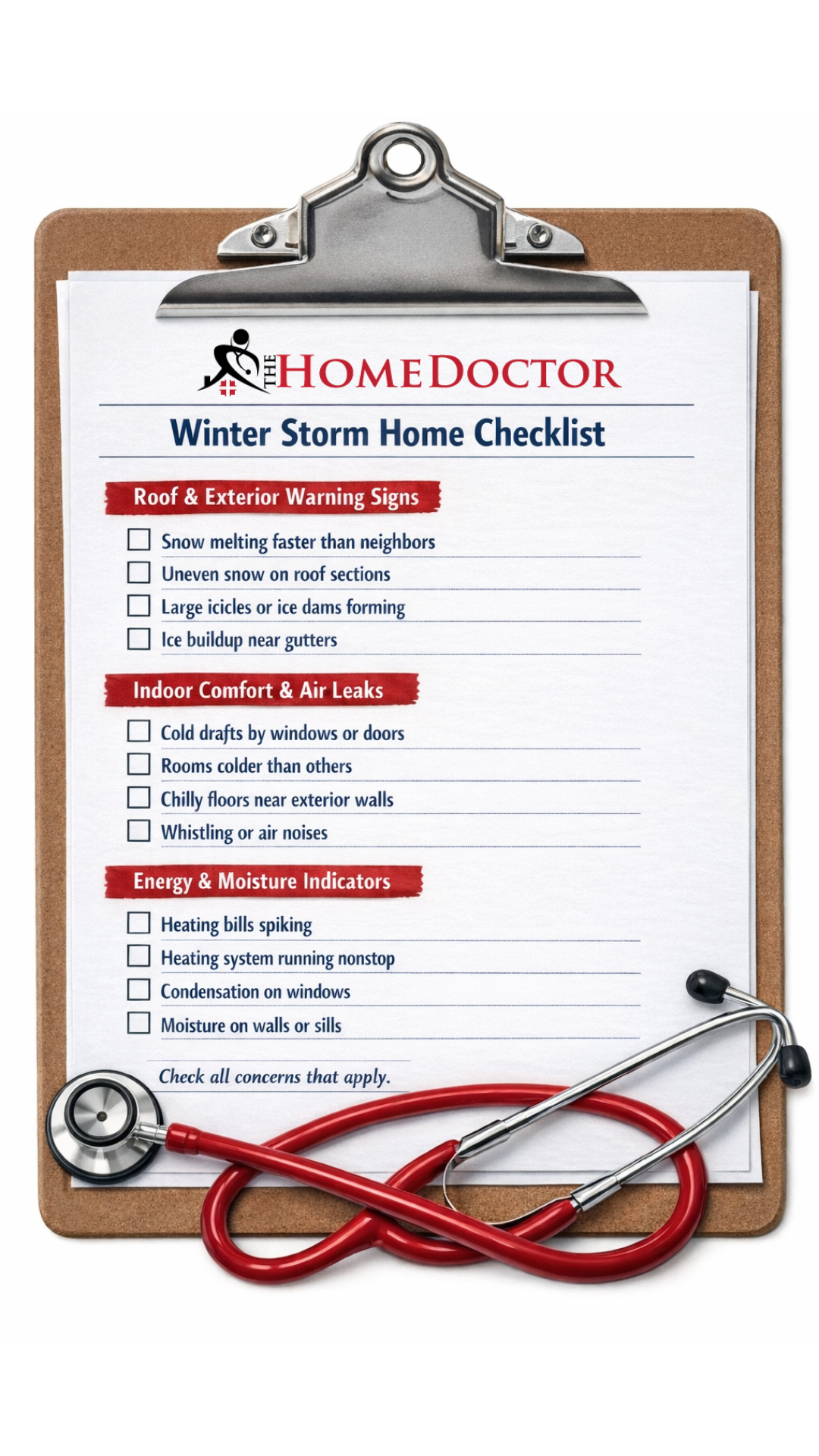
Quick Winter Storm Home Checklist
During a snowstorm or extreme cold, your house often shows signs of inefficiency in real time. Use this checklist to quickly spot potential issues while winter weather is happening—or shortly after.
Roof & Exterior Warning Signs
Snow melting faster on your roof than nearby houses
Uneven snow melt across different roof sections
Large or growing icicles along roof edges
Ice buildup near gutters or eaves
Indoor Comfort & Air Leak Signs
Cold drafts near windows or exterior doors
Certain rooms feeling noticeably colder than others
Cold floors near exterior walls
Whistling or airflow sounds during high winds
Energy & Moisture Indicators
Sudden or sharp increases in heating bills
Heating system running constantly without improving comfort
Condensation or fogging on windows
Moisture buildup on window frames or sills
Seeing one item on this list doesn’t automatically mean there’s a serious problem. But if multiple signs show up together—especially during or after winter storms—it’s often a signal that insulation, windows, doors, or the roof may not be performing as efficiently as they should.
When to Take Action (and When to Just Monitor)
Not every winter warning sign means something needs immediate attention. Some changes are normal during extreme cold, while others signal that parts of the house may no longer be performing efficiently. Knowing the difference can help homeowners make smart, timely decisions.
When monitoring is usually enough
In many cases, it’s reasonable to simply keep an eye on things, especially if:
Snow melts evenly and slowly across the roof
Condensation appears briefly during extreme cold, then clears
Energy bills rise gradually and predictably
Drafts are mild and limited to very cold or windy days
These signs can be part of normal winter behavior, particularly during severe weather.
When it’s time to take a closer look
It may be worth considering a professional evaluation if you notice:
Consistent or uneven snow melt after multiple storms
Repeated ice dams or heavy icicle buildup
Ongoing cold drafts that affect comfort
Heating bills rising without a clear weather-related reason
Moisture or condensation that appears regularly
These patterns often point to insulation gaps, air leaks, or aging exterior components that are no longer doing their job effectively.
Why winter is actually a good time to evaluate
Cold weather provides clear, visible evidence of how well a house is performing. Addressing issues sooner can:
Improve comfort for the remainder of the season
Reduce strain on the heating system
Help prevent moisture-related damage
Make future upgrades more targeted and effective
Taking action doesn’t always mean immediate replacement—but understanding what the house is telling you during winter puts homeowners in a much better position to protect comfort, efficiency, and long-term value.
Protecting Comfort, Efficiency & Long-Term Value
Winter storms don’t create problems in a house—they reveal them. Snow, ice, and extreme cold make it easier to see where heat is escaping, where air is leaking, and where comfort and efficiency may be falling short.
By paying attention to warning signs like uneven roof snow melt, ice buildup, cold drafts, rising energy bills, or persistent condensation, homeowners can better understand how their house is performing when it matters most.
If these signs feel familiar, The Home Doctor can help. Our team provides professional evaluations to determine whether attic insulation, windows, doors, or roofing are contributing to energy loss—so you can make informed decisions based on real conditions, not guesswork.
Addressing issues early can improve comfort, protect materials, and reduce long-term costs—during winter and well beyond it.
Thank you! Your submission has been received! We'll be in touch ASAP!
Oops! Something went wrong while submitting the form.
Share this entry:
limited time offer
limited time offer
40
% Off
50% OFF INSTALLATION WINDOWS, ROOFING, SIDING GUTTERS, DOORS, ATTIC INSULATION
+ No Payments Until 2028!
We protect the health of your home
factory trained installers
price match guarantee
financing available
Offer valid on complete replacement projects of 10+ windows, entire roofs, or all sides of siding. Gutter, door, and attic insulation projects qualify with a minimum job cost of $7,500. Discount applies to 50% off installation costs only, which typically account for 20-30% of the total job cost, resulting in a 10-15% overall project discount. Valid for new contracts only, cannot be combined with other offers. Valid on initial visit only, and has no cash value. Residential projects only; exclusions apply. Deferred payments only valid with this promotion. Valid only with our '1 Year' pricing. The Home Doctor reserves the right to modify or cancel this promotion at any time.
Thank you! Your submission has been received! We'll be in touch ASAP!
Oops! Something went wrong while submitting the form.